
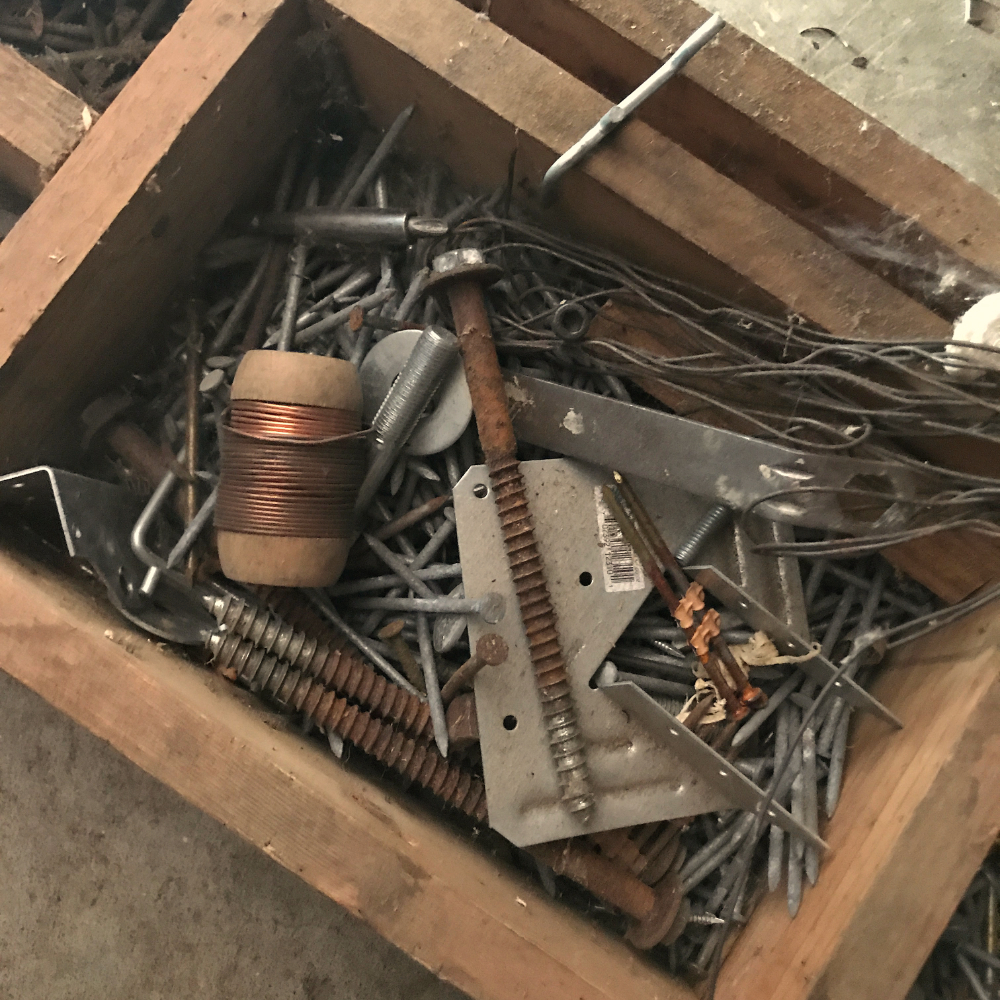
I’m sitting at my table sorting nails and screws. Some are rusty and some aren’t. The lot of them were piled in a dirty, broken wooden box in my garage, a dubious legacy from the previous owners of my house. But I’m a witch and an artist, and even in this state, rust is sexy. I brush away cobwebs, dust, and the occasional pine needle as I sort. The metal bits make pleasant tinkling sounds as I sort through them, but the dust makes me sneeze. I hate the feeling of grit on my hands, but I want to turn this jumble of metal into piles of tiny treasures, so I suck it up and keep going.
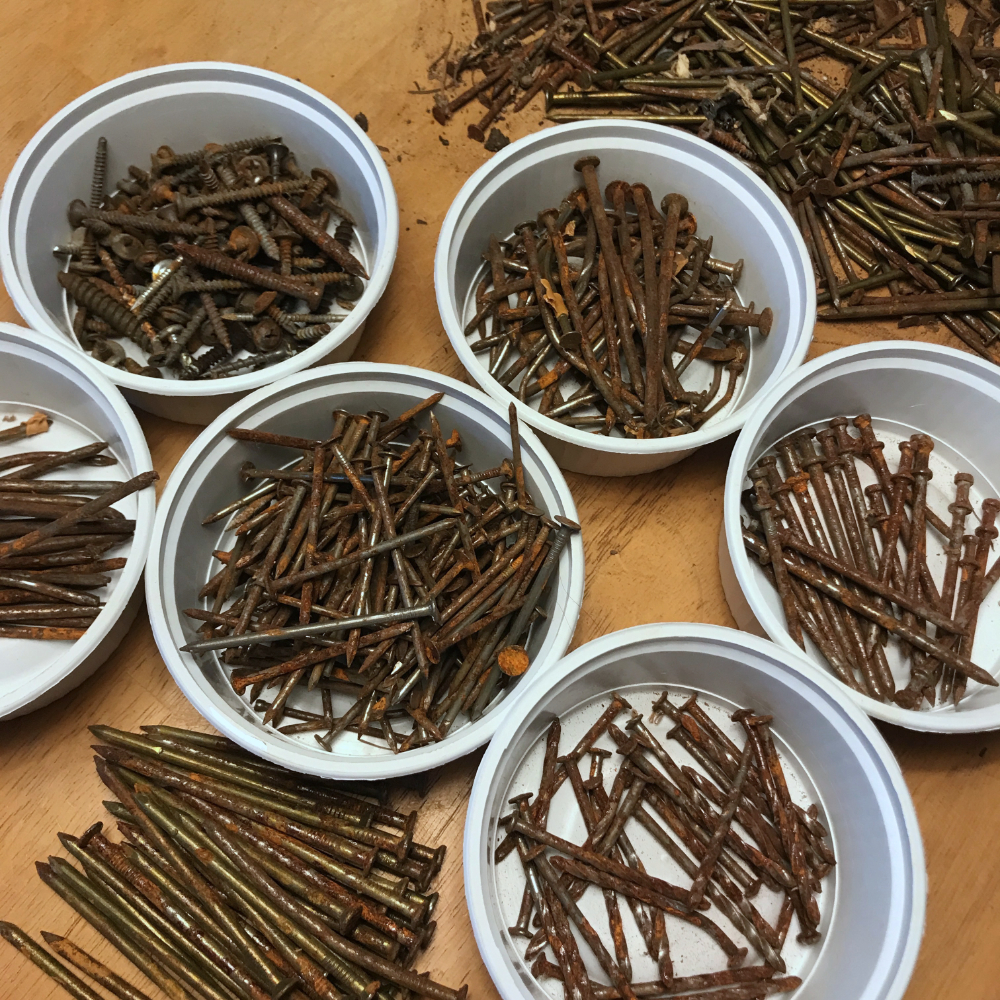
My mind wanders as my hands carry on the tedious sorting, and inevitably my thoughts run to the tests in folk and fairy tales. How many protagonists are set impossible tasks of sorting in the tales? Tests they pass, usually, because of previous acts of kindness toward strangers, now rewarded with a magical boon? Of course, no one is coming to help me with my rust: the task is daunting but finite, and I have no deadline. After a few sorting sessions, alternating with other tasks, I have several small dishes of rusty shapes, and two big tubs of clean, usable nails. I take the grimy, broken wooden caddy to the bathroom and scrub it with Murphy’s oil soap and an old brush. The scrubbing has me thinking, again, about the tales. Cinderella in the ashes, Vasilisa in Baba Yaga’s cottage, tale after tale of protagonists – usually female – set to scrubbing or serving for a mouth full of diamonds, a chance at freedom, sometimes their very lives.
I’ve often been troubled by these tales of salvation through diligence, especially considering how gendered most of them are. It’s always the diligent girl, after all, who gets the gifts, while the “lazy” girl is punished. Having spent so much of my life battling fatigue, chronic pain, and poor executive function, I was labeled as lazy over and over by people who had no idea of the challenges I was facing. The tales seemed to point an accusing finger at me, the girl who couldn’t keep up with the dishes or say the right things or make the bed every morning or please her stepmother/the terrifying witch/the Other Crowd her parents. No doubt, I often thought, should I encounter one of the Good Folk on the wrong day, I’d end up with a mouth full of toads.
Over the past year I’ve spent of lot of hours in therapy talking about the emotional side of executive dysfunction and chronic illness. Accepting physical and mental limitations is hard work, and I’m not good at it. It’s hard not to resent how overewhelming every task feels, or the fact that no matter how I feel, I need to eat and have clean clothes and dishes and to change my sheets sometimes. Talking all of this out and trying to reframe my thoughts around the topic of care tasks has me thinking a lot about those stories, how they made me feel, and wondering if there isn’t a different way of looking at the messages they hold for us.
What if the diligent girl isn’t just being the obedient, “properly feminine” one? What if, instead, her “virtue” is how she recognizes the true value of caring for the physical self and its habitat as deeply as she cares for “loftier” concerns?
And anyway, what are those loftier concerns? What does contemporary capitalist culture find so much more worthy of praise than care tasks? I suppose the list varies from person to person: intellectual pursuits, spiritual/religious pursuits, and of course, monetary gain. The care of the self and the home only matters insomuch as it creates a market for consumable goods, and provides bodies and minds that function just well enough to keep a job, but not well enough to disrupt the system. So we find ourselves in a society that with one breath dismisses domestic tasks as menial and trivial, and in the next breath labels anyone who can’t manage them perfectly a lazy slob; a society that urges us to buy, buy, buy, and then judges us for having so much crammed into our homes we can’t keep them tidy; a society where anyone who can afford to outsources care tasks to underpaid, vulnerable members of the community, while saying that those who stay home to tend children and animals and homes for their own families are not actually working.
In such a society, tales featuring the diligent girl/slothful girl duality become especially fraught.
But if we take a step back from society’s twisted, contradictory take on care tasks and think of them as what they are, it changes the flavor of these tales. While our culture has a warped relationship with care tasks, as individuals we can transform our own perspective.
First of all, as KC Davis so often reminds us, “care tasks are morally neutral”. And it’s true: your ability to execute a care task has zero reflection on your value as a person, or on your goodness or lack thereof. I remind myself of this truth again and again as I try to manage my life, and sometimes it helps.
But I want to dig deeper into these stories, and the significance of care tasks within them.
What if, for example, one truth at the heart of these stories is there are more treasures, more magick, more otherworldly “gold” available to those who can see the holiness of everyday, humble things? No, there’s no morality involved in doing the laundry or sweeping the floor. But care tasks are tools for providing ourselves with more comfort, nourishment, and pleasure. And sharing that with others is an act of devotion, whether those others are human or not.
Expanding on this thought, what if the girls who reject giving care to the ones who ask are rejecting themselves, their very physical bodies and lives, as they reject the tasks that maintain those bodies and lives? Society might treat these tasks with scorn and relegate them to the world of the despised female. But these are bodily tasks, and scorning them is scorning our bodies. Our bodies deserve love and care. Period. Providing that care is not demeaning any more than it is virtuous. Care tasks are morally neutral, but that doesn’t mean they’re without value.
I also feel a need to point out that often, while the dire consequences enacted on the lazy girls might seem to be related to not performing tasks as expected, I don’t think that’s really what the punishment is about. Yes, the “lazy” girls refuse to perform the tasks they are asked to perform: but the punishment is usually as much for their rudeness as it is for their alleged sloth. Fairy and folk tales have a lot to teach us about navigating a world full of spirits who might appear to us at any moment in a human guise. The expectation of these beings is kindness, or at least politeness. Which is why it’s smart to be kind to everyone we meet, whether or not we care about being a kind person, or even a good one.
Back to my rusty treasures: sorting them out doesn’t feel like a punishment because I’m motivated by desire and creativity rather than a sense of obligation. As I sort, I think about what shenanigans we’ll get up to together once they’re cleaned up and sorted. Yes, I talk to them a bit as I work, exclaiming over interesting shapes and grungy patinas. And this leads me to a final thought about the role of domestic duties in stories: the animist aspect. Folk tales often reflect the animacy and agency of both natural and made “things”: indeed, in a folk tale, almost nothing is JUST a thing … and it’s not just because talking animals make fun stories. The world is alive, so much more alive than an extractive economy wishes to admit. Which means care tasks are never only about human lives and needs. If we recognize that everything we bring into our lives requires not only space, but care, we might begin to consider acquisition more carefully. And we might also begin to form more loving relationships with the beings we are surrounded by, whether or not they can move or speak on their own. Folk tales are a wonderful guide to engaging with an animate world more respectfully, and finding joy and help in a myriad of relationships. For me this is one of the most significant reasons that stories matter.
And hey, if you’re desperate for some rusty nails, I can probably hook you up.
If this post inspired or informed you, or just made you happy, feel free to buy me a cup of ko-fi or purchase an item from my ko-fi shop. Your support helps with the cost of web hosting and other expenses, allowing me to spend more time creating posts for you.
 Northwest Witch
Leave a comment