
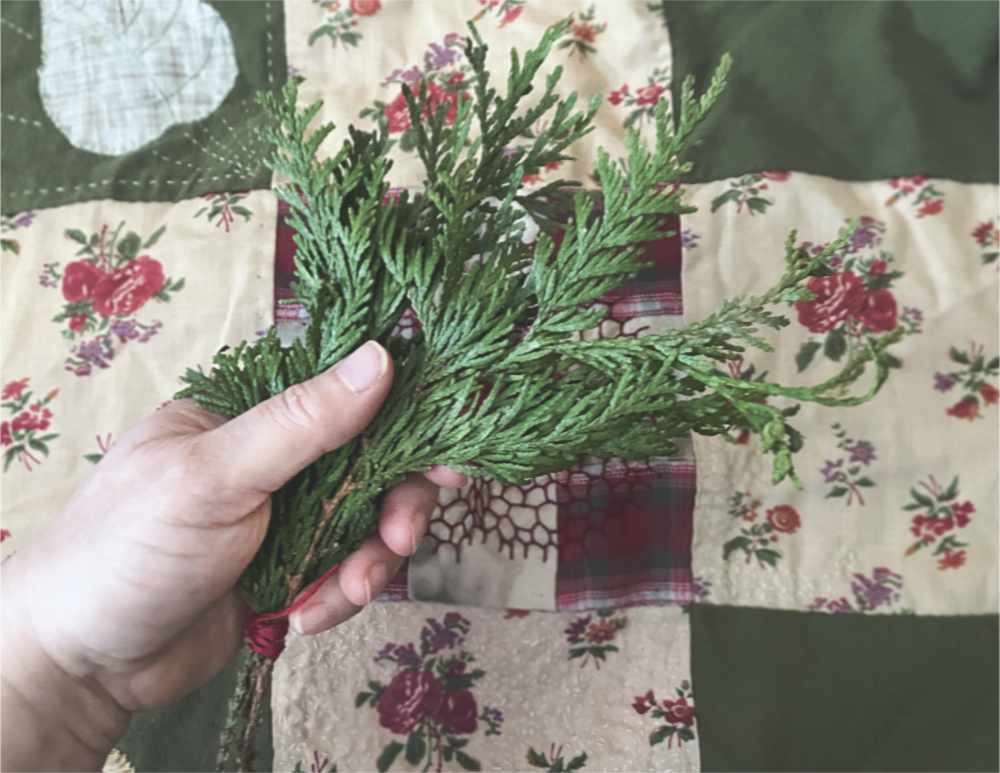
Late in the morning on a sunny day, I gathered recently fallen fronds of red cedar, still full of life and energy. I bound them together with red thread and sat with them under the tree, asking them to speak to me in my dreams.
For three nights I slept with the little bundle tucked into my pillowcase. I’m not a good sleeper: between the hormonal uproar of perimenopause, chronic pain, anxiety, and an aging cat who likes to scream into the void in the wee small hours, good sleep is hard to come by. And, sadly, red cedar didn’t chase away my struggles with sleep. But I did dream.
And all three nights those dreams were troubling: dreams of losing my way, losing my vehicle, trying – and failing, repeatedly – to get home. These dreams didn’t in any way align with the way I feel when interacting with red cedar during my waking hours. I wondered if they were just my brain dumping anxiety, rather than having anything to do with red cedar. Was red cedar just not willing to speak to me this way? Were these troubled dreams only my brain talking to itself?
Or, worse yet, were my dreams warning me of events to come?
After the third bad night, I talked about the dreams with two trusted friends. I’ve understood for a long time that troubling dreams aren’t necessarily a problem: that they are, in fact, often important messages, and the only way my brain will hear what it needs to hear.
And after some conversation, I realized this was the case with my cedar dreams. Red cedar was talking to me about how I perceive home, safety, and belonging, and how that makes me move through the world. My understanding of these concepts was shaped by a troubled childhood bereft of safe people and places. What I’ve historically recognized as home and community, and how I understood my role in such places, has often led me to grief. Clinging to these misconceptions will most certainly continue causing me pain. I’ve made a lot of progress on this front in my home and marriage: but outside of the safety of my house and my wife, I still mostly flounder in my human interactions. Red cedar was urging me to let go of my faulty thinking and figure out what I need from community in order to feel safe, and to have a sense of belonging without sacrificing who I am as an individual.
And while this understanding was valuable and timely, I have to confess I was a bit disappointed that this was the message red cedar chose to share with me in my dreams. It didn’t make sense to me at the time, and seemed almost out of character for western red cedar.
But this morning I realized I was putting red cedar in a box, restricting them to a set of properties I’ve observed in the past, instead of approaching them as a person who can communicate with me about anything they choose, as a friend who might want to to help me understand something I need to know. My human friend might be a farmer, but that doesn’t mean the only thing she can talk to me about is farming. Why should I think red cedar can only talk to me about their own medicine or magick?
I feel sheepish realizing that, after all these years of relating to plants, I still so easily get hung up on my assumptions. It seens I can still somehow believe I fully understand a plant after a few experiences with them. But plants and trees are people too. While members of the same plant species will all have much in common, each individual member of that species could form a different kind of relationship with me. Which is the whole point of this challenge.
What an excellent reminder that sometimes the greatest gifts our plant allies offer us is a chance to laugh at ourselves.
Not sure what the Plant Spirit Ally Challenge is? You can learn more about it here.
If this post inspired or informed you, or just made you happy, feel free to buy me a cup of ko-fi or purchase an item from my ko-fi shop. Your support helps with the cost of web hosting and other expenses, allowing me to spend more time creating posts for you.


 Northwest Witch
Leave a comment