
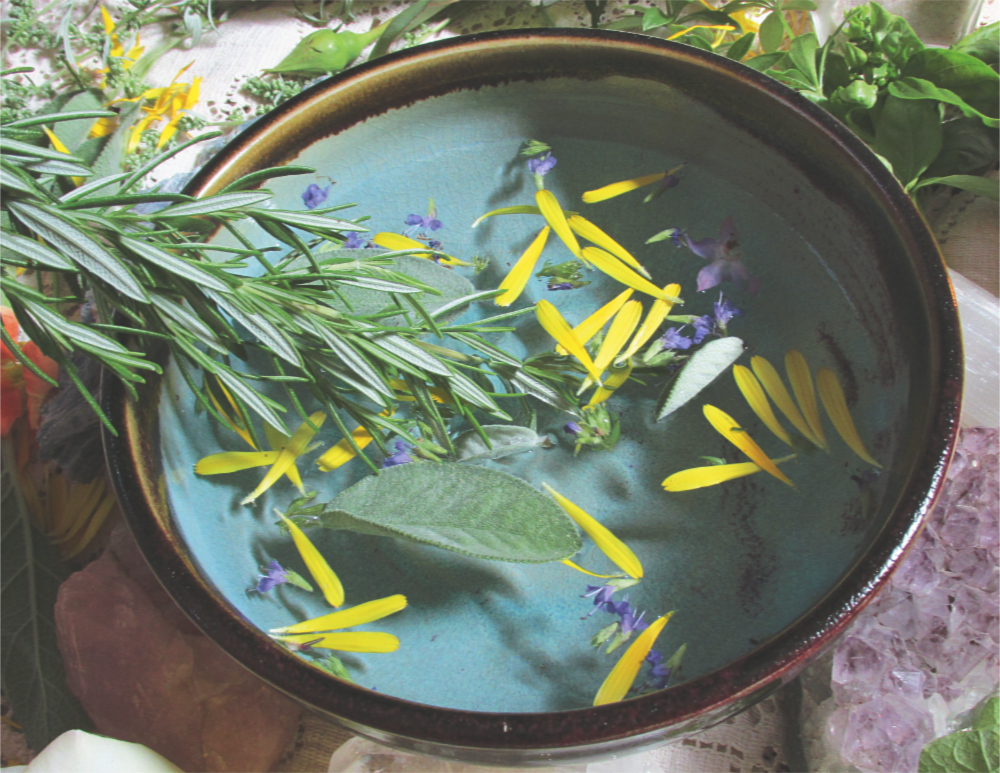
The third activity for the Plant Spirit Ally Challenge is to make an offering. Before I share some of my favorite ways to make offerings, I want to discuss why I suggest making an offering to a plant in the first place. If you are new to working with plants in an animist, relationship focused way, you might wonder if a plant would even want or need an offering from a human. And the answer is … maybe, maybe not. It depends on the offering, and the plant.
But there’s a good reason for making an offering early on in this process.
The heart of the Plant Spirit Ally Challenge is one of developing a relationship with a plant, and through that plant, with the land we live on. To create this kind of relationship, many of us will need to shift the way we think about and relate to the land around us and the other-than-human people who live there.
It’s easy to find information on what plants can do for us. It’s also easy to find information on the many ways humanity is hurting the land and the beings who live here. It’s much harder to find information on what we might have to offer the plants, or how we might benefit the plants in particular, or the land in general. But humanity as a danger to the land isn’t the whole story. To believe our effect on nature can only be detrimental can freeze many of us with hopelessness, making it feel like a waste of effort to try to live a life that is kinder to the ecosystem. To believe we only hurt nature sets us apart from nature, isolates us from the community of the ecosystem. Which can then lead us to even more detrimental actions, as we don’t recognize our own kinship with our habitat.
But we ARE part of nature, and our role isn’t only that of destroyer. Indigenous peoples all over the world have demonstrated ways the relationship between humans and our habitat can be a mutually beneficial one. But it’s going to take a lot of work for many of us to come to a place of right relationship with the land. I know I’m not there yet, but I’m trying, and I know a lot of other humans are trying. Developing deep bonds with plant friends is a wonderful place to begin seeing ourselves as part of nature. And learning to make appropriate offerings to our plant friends is a lovely first step in the process of shifting our relationship with nature from one of extraction to one of reciprocity.
When I first started learning to relate to plants as people, I treated offerings as a kind of transaction. I want the plant to help me, so what can I barter for their help? And I still believe this is a step up from treating all of nature’s beings as commodities, free for the taking. It’s not WRONG to offer up what we have in a sort of green barter system. But a barter system doesn’t equal a relationship, and some of the greatest joys in my life have come from having a relationship with the land and the plant people beyond a transactional one. The deeper my relationships with my non-human friends become, the more I understand that the exchange of gifts is far more about sharing and affection than about keeping score and weighing the balance of give and take. Which, I might add, is the beautiful thing about healthy human relationships too.
So I hope you’ll consider this exercise in making an offering to your plant friend as a jumping off point to explore the idea of reciprocity with the land. The first offering is an expression of your desire to begin a friendship that will bring joy and nourishment to both you and the plant you’re working with. I hope the first offering won’t be the last gift you give to your plant friend.
Now that we’ve discussed why we make offerings, it feels important to talk about what sorts of offerings won’t be beneficial to your ally. Essentially, anything which doesn’t biodegrade or provide some form of benefit to the ecosystem is litter, not a gift. The land can’t use your money, your cute figurines, that pretty polyester ribbon you got at the craft store, or your favorite candy. Most prepared human food is poisonous to wildlife. And plastic is an ecological nightmare. So what sorts of offerings might actually benefit the plant you want to befriend, or their habitat? The short answer is … that depends. But of course there’s a much longer answer.
One Time Offerings
For this exercise, a one-time offering might be where you want to begin. Some of my favorites include:
1. Your breath
Plants use carbon dioxide in the process of photosynthesis. You breathe out carbon dioxide. Offering your breath to a plant friend is the simplest gift. And yes, you receive the gift of oxygen in return. We’ll never be more generous than our plant friends, and that’s okay. They aren’t keeping score, and we don’t need to either. But if all you have to offer is your breath, it is still an offering. Given with love and respect, it’s an even more precious one.
2. Fresh water
Obviously, clean water is only a gift under the right circumstances. I wouldn’t offer any kind of water to an outdoor plant during the rainy part of the year in the Pacific Northwest, for example. But during our increasingly dry summers, it’s a welcome offering. Context is everything. If you want to make the offering extra special, you could charge the water with moonlight, sunlight, energy (reiki or any other kind of healthy, joyful energy) or beloved stones and crystals. Pour the water right at the roots of the plant instead of on the leaves for the most benefit to the plant.
3. Creativity
Sing a song, recite a poem, or read a story to your ally. It might feel a little silly at first, but I think plants respond to the energy of creative work.
4. Energy
If you practice reiki or any other form of energy work, you can give energy to your ally.
4. Donate
If you have more money than time or energy, you could make a donation to an organization that works on behalf of plants or the environment.
Ongoing offerings
Of course, if you want to deepen your relationship with your ally or the land, there are many ongoing practices you can perform as offerings to them.
1. Clean up
I think one of the best offerings we can give is our time and energy picking up litter where we find it. In my neighborhood, stray trash is a huge problem. I pick up trash on my daily walk, but I never get close to disposing of all of it. If more of us gave trash cleanup as an offering, the land would be a lot better off.
4. Garden for Wildlife
If you are responsible for a yard or garden, consider wildlife in your caretaking. Avoid harmful chemicals, and learn about the needs of the creatures you share space with. Some helpful resources for wildlife friendly gardening:
The Humane Gardener by Nancy Lawson
Rebugging the Planet by Vicki Hird
6. Volunteer
Volunteer with an organization that plants native plants, does beach cleanup, or otherwise works to aid the local ecosystem.
I’m sure I haven’t thought of all the possibilities for this exercise. If you have a favorite offering you make to the land or your plant friends, feel free to share it in the comments.
Not sure what the Plant Spirit Ally Challenge is? You can learn more about it here.
If this post inspired or informed you, or just made you happy, feel free to buy me a cup of ko-fi or purchase an item from my ko-fi shop. Your support helps with the cost of web hosting and other expenses, allowing me to spend more time creating posts for you.
 Northwest Witch
Leave a reply to How to Harvest Plants Mindfully – Michelle Simkins Cancel reply