
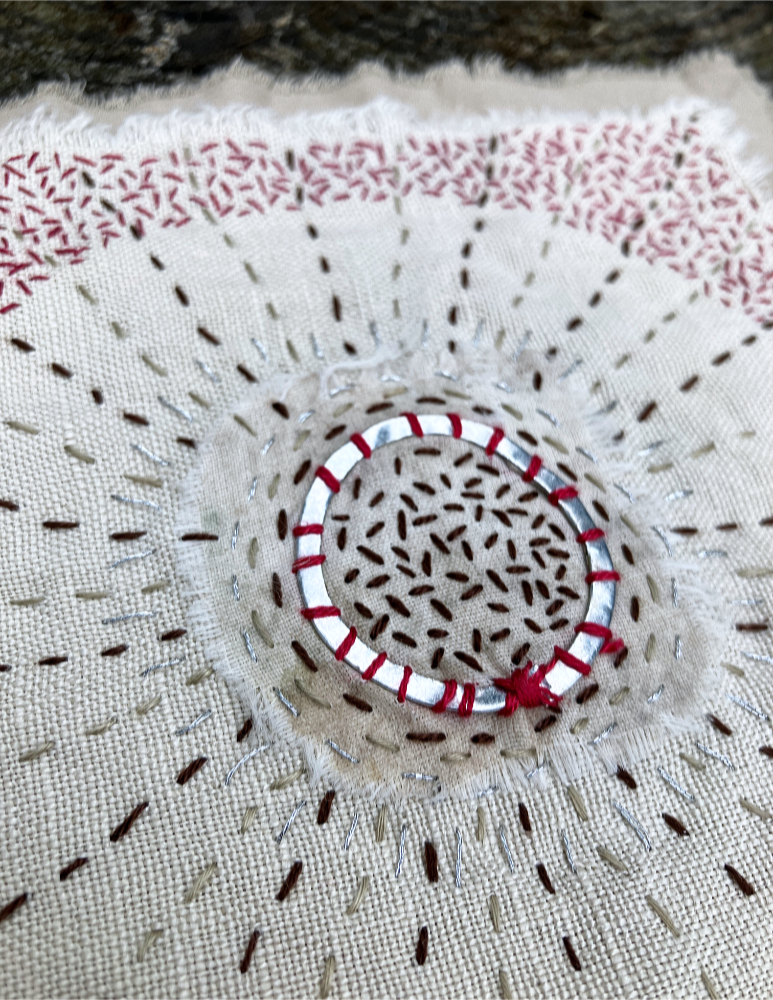
When I started the sacred mile project at the beginning of the year, I expected it to be mostly an exercise in cultivating delight. I wanted to love the place I live more deeply, understand it better. And of course there have been many moments of delight. Setting out for my walk every morning, I’ve enjoyed watching the seasons’ slow unfolding, so gradual they hardly seem distinct from one another anymore. Instead, the land changes incrementally from one day to the next, plants coming into their peak and then fading, the daylight hours increasing and decreasing, the angle of light shifting across the landscape almost imperceptibly day by day. It’s a beautiful and profound thing to love a place in this way, to come to know it intimately and slowly.
But I honestly didn’t expect it to hurt quite so much. I knew all my walks would be accompanied by a soundtrack of planes flying over, cars on the interstate nearby, leaf blowers and lawn mowers, barking dogs and screaming children. I did not, however, expect to pick up so much trash and still see so much more in the tiny woods near my house. I didn’t realize how many times a week the sound of chainsaws would echo through my neighborhood streets as residents cut down one beautiful, healthy, towering tree after another, not to mention the destruction of an entire lot of healthy old trees to build what will probably be another gas station or starbucks. Maybe I should have expected it all. I know how suburbia works. I just didn’t think about how in my face it would be.

Early on I started keeping some of the discarded items I found on my walks, putting them on a table in my studio and debating what, if anything, I should do with them. I considered making a journal, but many of the objects are too bulky to fit easily in a book. I’m selective about what I keep, but even so the pile has been growing alongside my dismay. I’ve considered, many times, throwing it all in the trash and forgetting this whole project of mine. But each little abandoned item I brought home seemed to want something from me, to want to be something other than unloved and abandoned. It seemed they all had something to say, or perhaps we had something to say together. But I didn’t want to only say “look how much trash is left behind in all the places I love.” We all know how bad it is. We all know how threatened these places are. I didn’t want to lean into that despair.
And the discarded friends I brought home wanted to be viewed with something better than pity or resentment. Each of these little items called out to me from their place among the leaves or gravel and asked to be brought home. Each of them calls to me from the desk to spend time with them, listen to them, and – most importantly of all – make something new with them. To honor them as treasures instead of discarding them like trash.
So I started.

As soon as I affixed the first piece – what seems to have once been a little ring of metal, now broken in one spot and flattened by something – I felt a sort of hum coming from the found item, a hum that intensified the longer I stitched. I used scraps of fabric from a cotton sheet and a big piece of fabric that might be linen, or a blend of cotton and linen, that once hung over a window in our house (though I don’t think it was ever meant to be a curtain). I stitched with some new and some vintage thread. And I found the process soothing. Not only because stitching is always soothing to me, but because making art with this tiny forgotten piece of metal felt like setting something right, like healing one tiny hurt in the world. Or, perhaps, healing two tiny hurts: my own hurt at witnessing yet another careless act of littering, and the hurt of this small being who was cast away. Have you ever felt the joy of a human-made creation when it is loved and treasured? It can be hard to detect in our loud, distracting world but if you open yourself up to the experience, it’s unexpectedly sweet. The joy of someone lost, now given a new home, new love, new beauty, is even sweeter.

Feeling this joy made me think more than ever about the way we as a culture treat non-human beings, especially the mass produced ones. It seems we see everything as disposable, and it hurts us in ways beyond the ecological damage it causes. To treat everything as disposable deprives us of a kind of connection that can make life more full and beautiful. To be surrounded by beings, not things, is to live a life of rich community beyond our neighbors and loved ones. To be surrounded by beings, not things, makes caring for these created ones less a chore, and more an act of love. I haven’t yet mastered this awareness of the world around me, but I’m practicing. It takes a lot of unpacking of our assumptions and cultural baggage, but oh it’s worth it. Isn’t anything worth it, if it brings us even more love and connection?
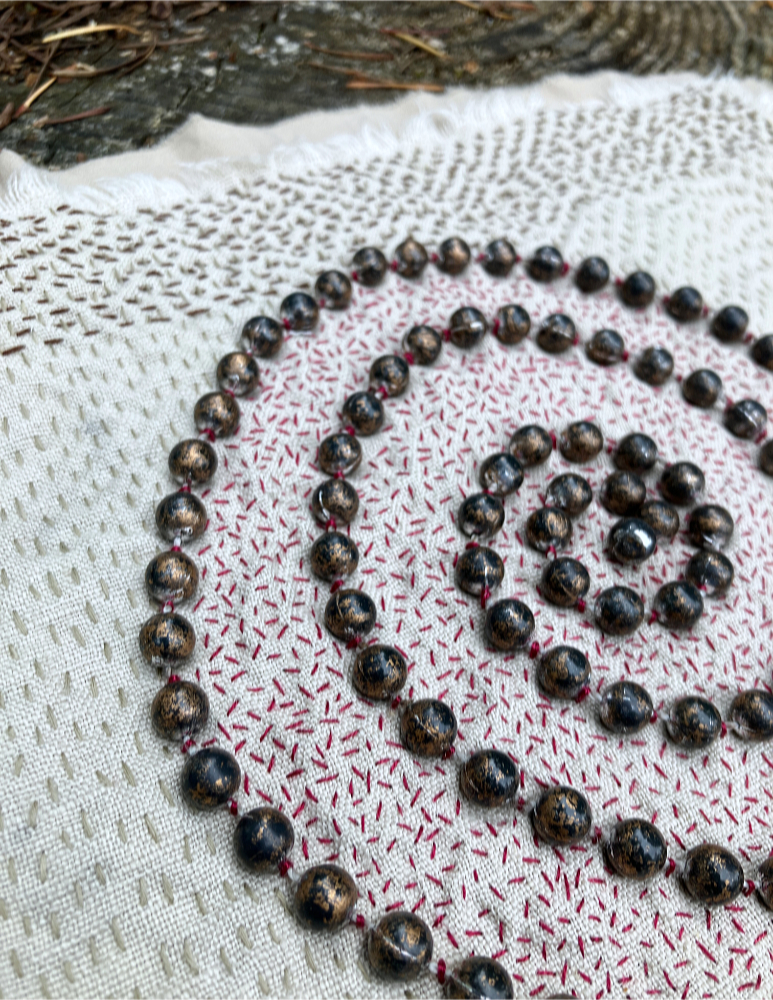
I have many pieces left to work with; I don’t know if they’ll all end up on a stitched piece or not, and I have no idea how many pieces I’ll make in the series. But I’m finding more healing than I would ever have expected to find in this project, and the work seems to be making all these once-lost beings happy too.
If this post inspired or informed you, or just made you happy, feel free to buy me a cup of ko-fi or purchase an item from my ko-fi shop. Your support helps with the cost of web hosting and other expenses, allowing me to spend more time creating posts for you.


 Northwest Witch
Leave a reply to nicomailfb484cc88a Cancel reply