

When the Plant Spirit Ally Challenge first came into being, it was designed to be a 30 day challenge. Many people participated and shared their experiences on social media, and it was a delightful, but very intense, month. This year I want to try the challenge in a slightly different way from the first time. I plan to spread the activities out over a whole year (more or less) instead of just 30 days. And what better day to start than the Spring Equinox?
Today I want to introduce you to my plant ally for the year, Western Red Cedar.
On my first ever wildcrafting adventure–over a decade ago now–my best friend and I meandered into the woods together. We were armed with baskets, garden shears, plant field guides, and the boundless enthusiasm reserved for the utterly uninformed.
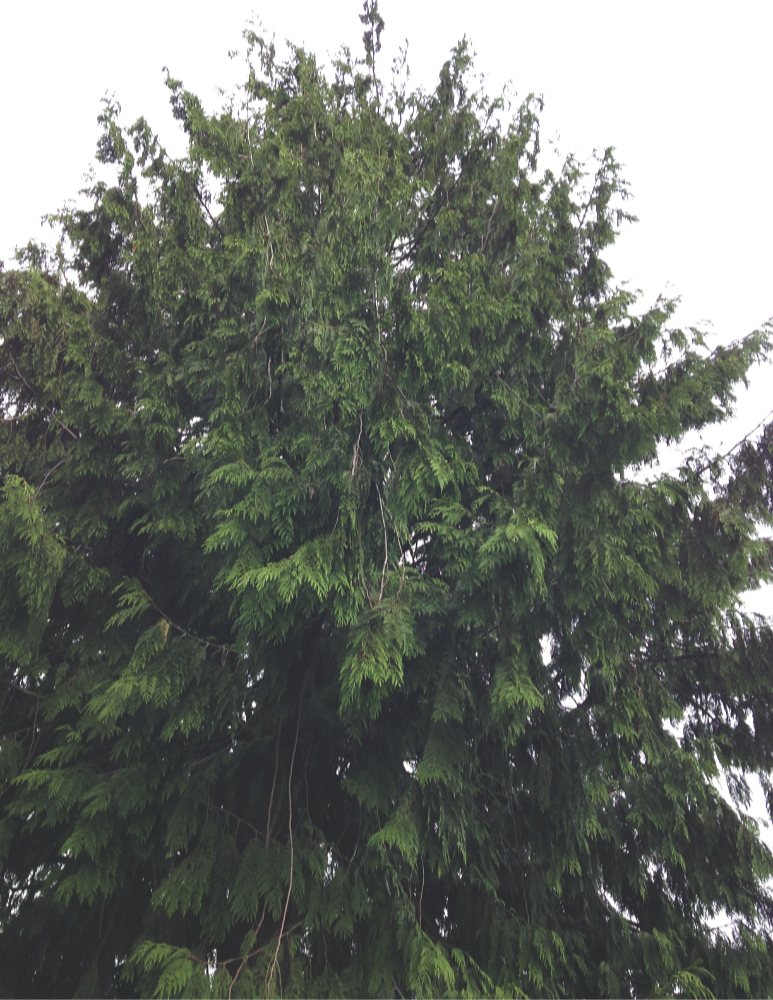
I can’t remember what we were looking for, but I DO remember the woodland being I couldn’t stay away from was a ubiquitous evergreen with sweeping, fern-like foliage and a sweet, citrus-pine fragrance. Every time I came across another of these beautiful conifers, I had to stop and breathe in the scent. Some of the trees seemed to offer up a few snippets of greenery to my gathering basket.
I didn’t really know what I was doing back then, and I was probably not as polite to the woods as I should have been. I’ve learned better since.
If you want to gather wild plants, I suggest reading some of these articles first:
- Ethical Wildcrafting by Scott Kloos
- Foraging for Wild Edibles and Herbs: Sustainable and Safe Gathering Practices by Juliette Blankespoor
- The Honorable Harvest by Robin Wall Kimmerer
I didn’t manage to identify the tree that day, but once I returned home, I felt the urge to bundle the foliage for smoke cleansing. So I found some embroidery floss and made a pile of oddly proportioned bundles. Lumpy and misshapen as they were, once they were dry they made a sweet, pleasant smoke when smoldered, and they’ve been my favorite herb for purification and blessing ever since.
In time I learned the name of the tree: western red cedar (Thuja plicata), a.k.a. Pacific red cedar, western arborvitae or giant arborvitae. Thujas are not true cedars: instead, they are members of the cypress (Cupressaceae) family, which also includes junipers. For this reason, botanists will sometimes write the name as western red-cedar or redcedar.
Western red cedar is a Pacific Northwest native, thriving in damp coastal forests from Northern California all the way to the southeastern tip of the Alaska Panhandle. According to Northwest Trees by Stephen F. Arno & Ramona P. Hammerly, western red cedar was vital to the wellbeing of the natives of the Northwest Coast. They were used in so many ways, in fact, the tribes referred to them as “Long Life Maker”.
Red cedar is a true survivor. One of their names–arborvitae–means “tree of life”. They thrive in wet shade, where many conifers can’t grow. And though their bark is very thin, they continue to grow even when they’ve been hollowed out by fire or decay. Sometimes a broken branch that falls on moist ground will take root, and a fallen and uprooted red cedar can grow a row of young saplings from the branches that touch the ground.

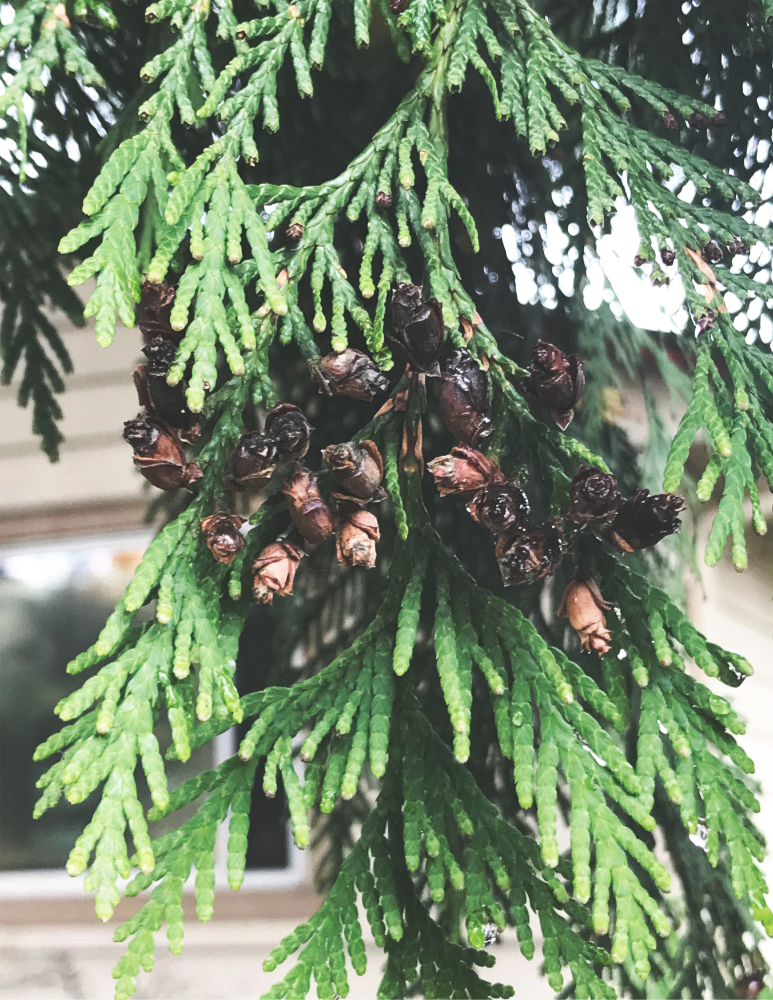
Western red cedar has several near look-alikes, so proper identification can require a bit of attentive observation. In the Western United States, incense cedar (Calocedrus decurrens) and yellow cedar (Callitropsis nootkatensis) are common and, at first glance, can seem almost identical. Step close, though, and the differences become apparent.
Red cedar has thin, reddish-brown or sometimes gray bark that grows in long strips, while incense cedar has thick bark, and yellow cedar bark tends to look more flaky. Sections of the bark of red cedar seem to be almost lifted away from the tree in long vertical lines.
The wood and foliage have a strong, sweet smell (while yellow cedar, for example, emits a mildew-like fragrance when crushed). The branches of red cedar sweep downward from the trunk, but the ends of the branches then rise upward, giving the branches a sort of “j” shape: incense cedar branches tend to grow upward, and yellow cedar branches tend to droop without having the distinctive upsweep at the end.
The trunk of red cedar is buttressed, making the base of the tree look almost like a very full skirt. And the cones of red cedar look almost like tiny rosebuds before they open, and maintain an almost egg-like shape even when mature. Yellow cedar cones, however, look more like small, green or brown popcorn, and incense cedar cones look like a duck bill – closed tight when immature, and open wide with the “tongue” protruding when mature and open.
If you’re trying to id a tree who might be red cedar, here are some links to help differentiate between these similar species:
- Northwest Conifers red cedar i.d. page
- Northwest Conifers incense cedar i.d. page
- Native Plants PNW’s yellow cedar i.d. page
I’ve experienced red cedar as a kind friend when I was devastated by hard times, feeling stripped bare and empty. Sitting with red cedar comforted me in times of deep trauma, and helped me find a still place inside myself when everything around me was in turmoil. But for all the years I’ve known this tree friend, I’ve never really explored all their attributes, and I certainly haven’t learned all I could about them. And now, I’m incredibly lucky to have a towering western red cedar right in my back yard beside my patio. So this year I’ll be getting to know this particular red cedar very intimately. It’s good to know as much as possible about any kind of plant, but even better to have one specific plant friend, who will share qualities with all the others of their species but who is also an individual with a distinct personality and purpose.
If you’re just finding out about the Plant Spirit Ally Challenge, you can download the free challenge guide here. If you need help finding an ally, visit my informational post for day one of the challenge. And don’t forget to follow the challenge Pinterest Board, which I’ll be updating with helpful links and resources as I find them.
If this post inspired or informed you, or just made you happy, feel free to buy me a cup of ko-fi or purchase an item from my ko-fi shop. Your support helps with the cost of web hosting and other expenses, allowing me to spend more time creating posts for you.

 Northwest Witch
Leave a reply to Nancy D Cancel reply